Global Macro Quarterly Outlook
November 2026*
When Chips Hit the Fan
- While technology stocks have been volatile, global earnings growth remains resilient, supported by robust AI investment and strong hardware demand.
- Despite growing concerns about AI financing and regulation, alongside higher interest rates and geopolitical risks, we expect the economic expansion to continue into 2027.
- We remain constructive on equities and commodities, favouring non-US markets and sectors exposed to AI and infrastructure investment. Rising investor scepticism and improving valuations support selective exposure, while industrial metals remain a preferred commodity allocation.
- Higher yields have improved the diversification benefits of government bonds. We remain neutral on duration and investment-grade credit, underweight high yield, and retain our medium-term bearish USD view.
Global Outlook
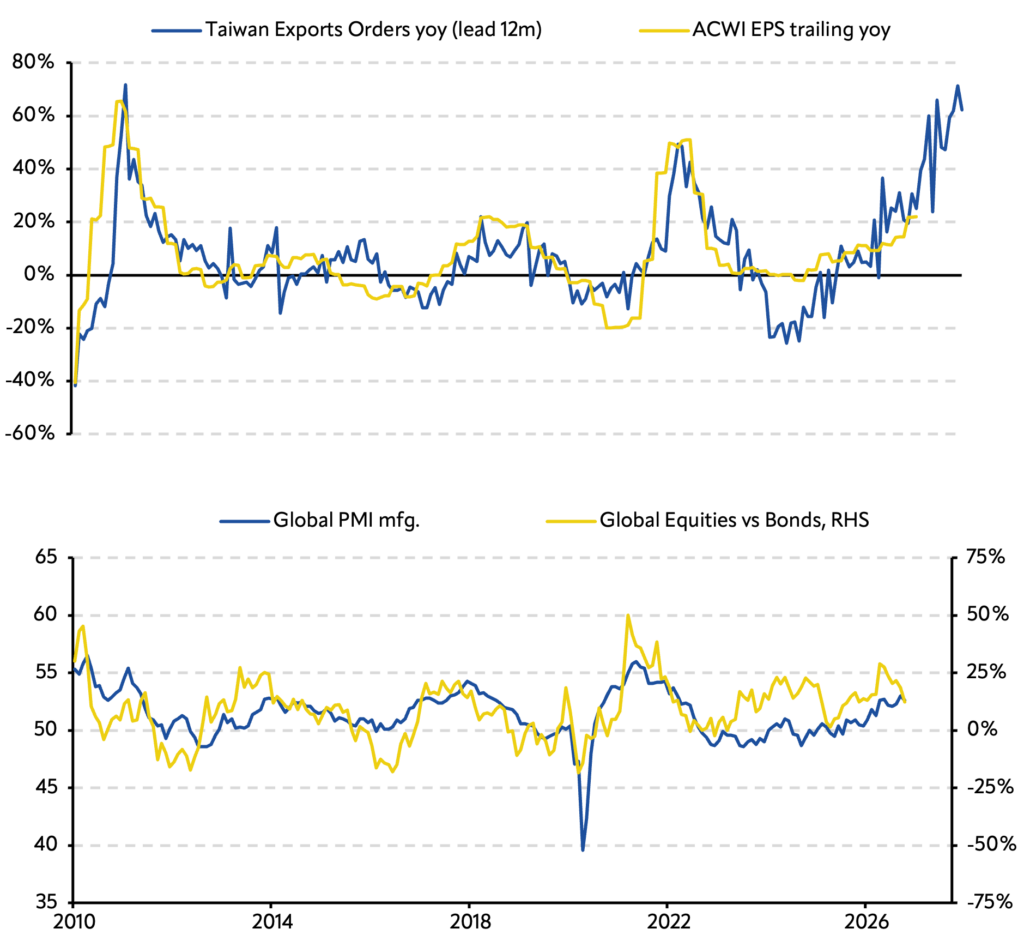
Several themes are influencing markets, including AI, higher energy prices, Fed rate hikes and a wave of mega-IPOs. Following the US midterm elections, concerns over potential AI regulation have added to pressure on technology stocks. While these narratives have generated considerable noise and volatility, global economic activity remains resilient, supported by continued growth in AI-related investment. A broad range of cyclical indicators are consistent with further expansion including above-trend global PMIs and robust Asian export growth (see Chart 1).
This strength is particularly evident across the AI supply chain. Despite growing concerns about the sustainability of AI investment, underlying demand indicators continue to point to a substantial buildout in computing capacity. Hyperscalers have continued to raise their capital expenditure plans, while GPU rental rates and memory prices suggest that demand for scarce computing resources remains strong.
Yet markets are sending a more cautious signal. Global Information Technology equity valuation multiples have contracted even as earnings have continued to rise (see Chart 2). Rather than an earnings-led bear market, the recent correction has so far been driven primarily by a reassessment of valuations, government regulation, financing conditions and the capital required to sustain the AI investment cycle. These concerns are also reflected in sentiment indicators, including increased Google searches for “AI bubble” (see Chart 3) and the AAII bull-bear survey, which has remained in net bearish territory despite strong earnings.
Chart 1: Global Cyclical Indicators
Source: Bloomberg
Chart 2: ACWI Technology Index Multiples Have De-rated
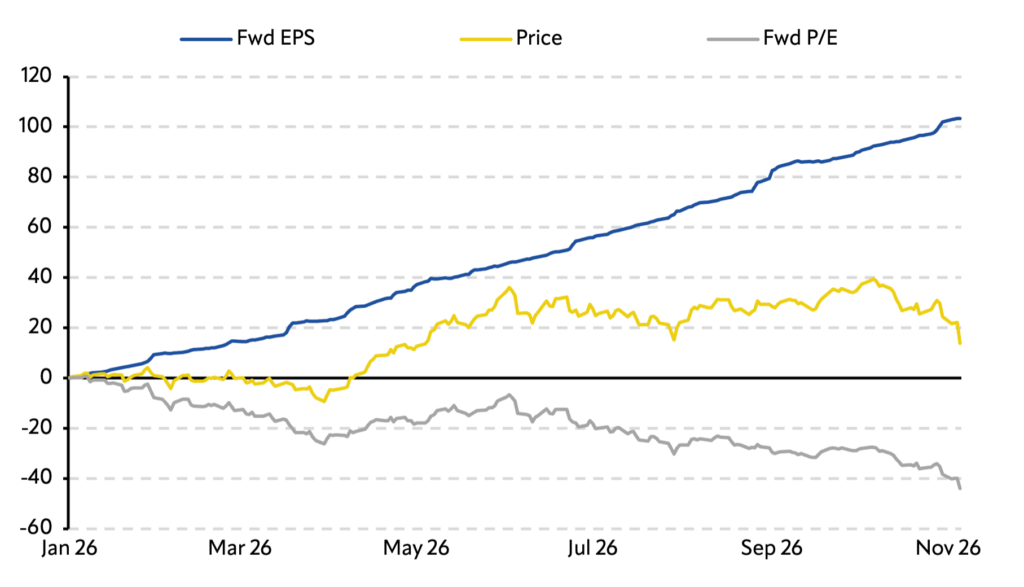
*Percent change since January 2026.
Source: Bloomberg
*The publication reflects asset performance up to October 30, 2026, and macro events and data releases up to November 5, 2026, unless indicated otherwise.
The information contained herein is obtained from sources believed by City of London Investment Management Company Limited to be accurate and reliable. No responsibility can be accepted under any circumstances for errors of fact or omission. Any forward looking statements or forecasts are based on assumptions and actual results may vary from any such statements or forecasts.